Education and Training
To promote entrepreneurial culture in Pakistani society keeping in view of
local economic, social, political, and geographical conditionse classroom as well
as disseminated at national and international levels.
- Design a new module on "Entrepreneurship" in the existing business management programme.
- Design a Masters of Business administration program in Entrepreneurship.
- Training of Trainers (Not exclusive for Superior staff but also providing services to academic as well as the development of organizations in Pakistan and eventually
in South Asia and the Gulf regions).
- Training of potential entrepreneurs (with indigenous material irrespective of their educational background or experience).
- Training of existing entrepreneurs (for growth, creativity, innovation, and sustainability).
- Training of graduates and post-graduates in "entrepreneurship" (irrespective of their academic affiliation and subject areas).
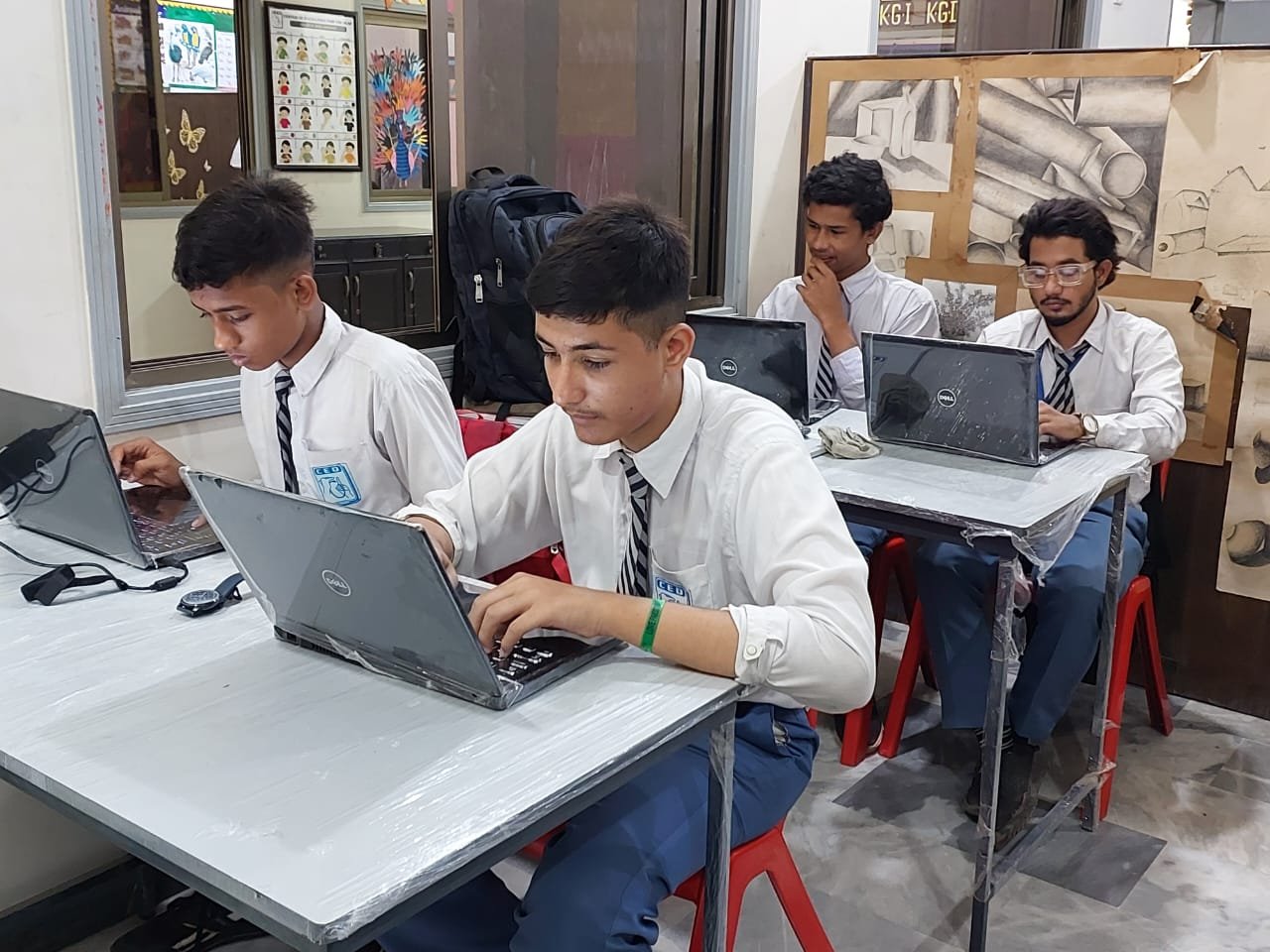
The first training of students was held on 5th to 9th April by Dr. Muhammad Azam Roomi.
The center will target essential training to the following categories of people:
Students (Young Entrepreneurs):
Educational institutes can request us to professionally train their students and faculty with the objective to develop an understanding of entrepreneurship and to evoke their entrepreneurial potential. Their institutions will finance them.
Company employees:
The corporate sector can engage our services to train their employees. They will tell us about their training needs and we will provide them with customized training.
General public:
In this category the general public will be encouraged to receive training in entrepreneurship to begin their businesses. The cost of training will be charged only from those who can afford it. Training will be free to those who cannot afford.
Entrepreneurship
One cannot be sure of the success of a business but the risk involved in business can be minimized through efficient planning and analyzing your inherent entrepreneurial abilities.
Entrepreneurship requires that:
You should be an initiator
You should initiate projects, make hard decisions and continually conduct follow up activities.
Reasons for business failure
Lack of Industrial Experience
Lack of experience in the industry will lead to poor organization of a firm and its resources. The structure of the industry in which the organization operates substantially influences small, firm performance outcomes.
Inadequate Financing
Financing is the lifeblood of growing a business whether in the startup phase or in the later stages. Many businesses fail due to lack of proper financing channels. It is not a matter of unavailability of funding, but the lack of planning for funding to support opportunities for growth. Planning in advance, rather than suddenly looking for financing, is a good practice. Trouble results when entrepreneurs do not have sufficient awareness of the costs involved in raising capital, are not prepared with alternative funding sources in case of rejection from financiers, and fail to consider using a combination of debt and equity to fund the business. Other reasons involve failure to plan for a growing business.
Lack of Adequate Cash Flow
Cash flow is the measure of a firm’s ability to maintain sufficient funding to meet its expenses for day-to-day activities of the business. Many small businesses fail because they don’t project what cash will come in every month, and thus, how much cash can go out. It is vitally important for entrepreneurs to learn some basic accounting disciplines and be able to make cash flow projections that will help them understand how much they can afford to spend every month.
Poor Business Planning
Nine out of ten business failures are caused by a lack of general business management skills and planning. A good business plan helps identify the mission, cost, structure, market, external influences, and strengths/weakness of a business. The business plan can separately include a marketing plan, operating plan and other things too.
Management Incompetence
Ninety percent of business failures are associated with “management inadequacy”, which consists of either management inexperience or incompetence. Good management efficiently implements and monitors the strategic and operational plans of a business.
Ignoring Competition
Capitalism is a cut throat system. Customers are always looking for the best deals, or at least, a better deal. If your competitors offer better products, services, or prices, customers will be attracted elsewhere quickly and you could end up losing your lifeline of customers. Keeping an eye on your competitors and positioning products accordingly is vital to staying in business.
Unworkable Goals
It is one thing to set goals and another thing to set workable goals. Entrepreneurial initiatives are fundamentally influenced by uncertainty. Setting realistic goals, within the bounds of acceptable risk taking and optimism, is important.
Diminished Customer Base
Competition can cause the customer base to diminish. From a small business’s perspective, it is good to focus on a customer strategy that works well for one’s business. At the same time it is also dangerous to focus only on one recipe for success. Diversifying the customer base is an important factor in building the business. Being flexible enough to adopt new trends and ideas is important to staying in business.
Uncontrolled Growth
Uncontrolled growth of the business can also cause it to fail if not handled appropriately. Obesity is a problem in business as it is in an individual’s health. Proper planning must be in place even for business growth. Successful growth requires a professional management team, flexible organization, and proper systems and controls.
Inappropriate Location
The old real estate maxim — location, location, location — may be even truer in the small business world. Even the best-run retail establishment will have a difficult time succeeding if it is run in a poor location. Location may not be applicable to all types of businesses, but when it is, it may be critically important.
Poor System of Control
While setting proper goals to manage the business, a system of controls is also needed to measure performance. Checks and balances help owners manage organizational activities. A firm cannot control the external factors affecting its environment such as customers and competitors but it can productively control its internal organizational activities. (A lack of proper 19 McGrath, R.G., 1999, falling forward: Real options reasoning and entrepreneurial failure, Academy of Management Review, 1999, Vol. 24. No. 1, 13-30 control on internal activities can eventually lead to business failure). Controls can be implemented in several aspects of the business. Controls can be set in place to measure the quality and quantity of production. Certain financial controls are needed to measure the overall financial performance of the business. A good control system will establish standards, measure performance, compare performance against standards and then provide for a way to correct procedures where needed.
Lack of Entrepreneurial Skills
Mostly during the startup phase of a new business, lack of entrepreneurial skills in an owner can cause a business to fail. This may not be true during the later growth and maturity periods of business where more administrative and management skills are required. A small firm’s performance outcome is a function of many variables, including individual owner characteristics, owner behaviors, and environmental influences. Entrepreneurs generally have a high need for achievement and social awareness, and they are high risk takers. Consequently, the personality characteristics of an owner can be a cause of business failure. In business, success is never automatic. It primarily depends on the owner's foresight and organization. Even then, of course, there are no guarantees.
Forms of Business Ownership
One of the first decisions that you will have to make as a business owner is how the company is structured. In making a choice, you will need to take into account the following:
- Your vision regarding the size and nature of your business.
- The level of control you wish to have.
- The level of "structure" you are willing to deal with.
- Expected profit (or loss) of the business.
SOLE PROPRIETORSHIPS
A sole proprietorship also known as a sole trader or simply proprietorship is a type of business entity which is owned and run by one individual and where there is no legal distinction between the owner and the business. All profits and all losses accrue to the owner (subject to taxation). All assets of the business are owned by the proprietor and all debts of the business are their debts and they must pay them from their personal resources. This means that the owner has unlimited liability.
Sole Proprietorship
+ Easy to organize
+ complete control of owner
+ All revenue belongs to the owner
- Owner has unlimited liability
PARTNERSHIPS
In a Partnership, two or more people share ownership of a single business. The Partners should have a legal agreement that sets forth how decisions will be made, profits will be shared, disputes will be resolved, how future partners will be admitted to the partnership, how partners can be bought out, or what steps will be taken to dissolve the partnership when needed;. They also must decide beforehand how much time and capital each will contribute.
Partnership
+ Easy to organize
+ Partners receive all income
- Partners have unlimited liability
- Partners may disagree
- Life of business may be limited
Company
A company, registered by the Securities and Exchange Commission of Pakistan which is considered by law to be a unique entity, separate and apart from those who own it. A company can be sued; it can enter into contractual agreements. The owners of a company are its shareholders. The shareholders elect a board of directors to oversee the major policies and decisions. The company has a life of its own and does not dissolve when ownership changes.
Corporation
+ Shareholders have limited liability
+ Can raise funds through sale of stock
+ Life of business is unlimited
- Incorporating takes time and money
- May result in higher taxes overall
|